
How to Design a Hassle-Free Pool Maintenance Routine That Fits Your Busy Schedule
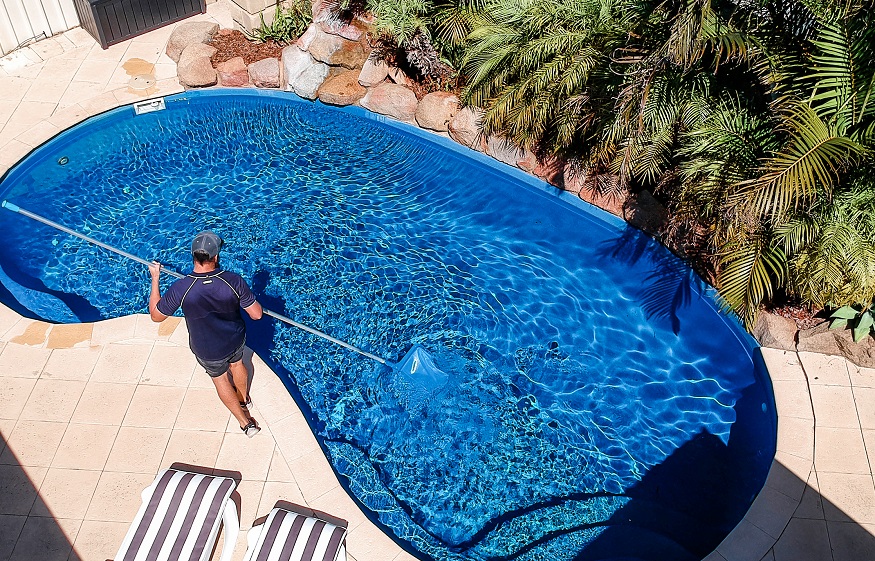
Most pool owners tend to go from one extreme to the other – ignoring the pool until it turns green, then spending a whole day fixing it. But it doesn’t have to be this way. With the proper maintenance routine in place, it takes less than 30 minutes each week to maintain a sparkling pool. And most of that time is spent checking the pool’s chemical levels.
The Mindset Shift That Changes Everything
Pool maintenance can seem a Herculean effort because most folks perceive it as a single, overwhelming mission. It’s not. It’s a dozen small skirmishes scattered over a half-dozen battlefields – and when you lump those battles together, that’s why you avoid your pool for weeks at a time, right?
The solution is to envision a micro-routine calendar. Think of pool care in three piles:
Daily things (2 minutes): Empty the skimmer and pump baskets. That’s all. Skimmer baskets fill with leaves, insects, trash – the flotsam of the day. A clogged basket means no more skimming – and restricted water flow back to your pump. Over time, that flow restriction can burn out your motor. Two minutes for all that? Cheap.
Weekly business (15 minutes): Check the water and brush the walls, steps, and floor. That brush is what you probably skip and it’s why algae sets up shop in corners and on ladder rungs. A quick brush disrupts that growth while it’s still in the baby phase.
Monthly upkeep (30 minutes): Clean and/or check your filter, check calcium hardness and total dissolved solids, and do a chemistry check. These are the quiet background numbers of pool ownership. They’re the numbers you never look at until something breaks.
Get Your Filtration Working For You, Not The Other Way Around
Based on data from the Pool & Hot Tub Alliance (PHTA), optimal water circulation and filtration are responsible for up to 80% of the manual effort needed to maintain a clean pool. This is significant because it indicates what you should focus on.
Actually, pool circulation – i.e. pushing water through your filtration system – does most of the cleaning work for you. Suspended particles are caught by the filter, chlorine works more effectively in a moving solution, and the “dead zones” in your pool where algae and other contaminants tend to collect are kept in suspension by the current.
If you’re still using a single-speed pump on an on/off schedule, you’re doing your pool and your power bill a disservice. A variable speed pump (VSP) can run at lower speeds over longer periods, pushing more water through your system while using a fraction of the power needed to run a single-speed pump at max. Pair it with a programmable timer set for off-peak electricity, and your filtration essentially runs itself on a schedule that suits your bill and your pool.
Read More: What Causes Uneven Room Temperatures and How Professionals Fix It
Your filter type determines your optimum maintenance schedule, as well. Cartridge filters don’t backwash – you’ll need to crack them open and hose them down a couple times each season. Sand filters and diatomaceous earth backwash easily enough. Whichever type you have, research and follow the recommended cleaning schedule, and pay close attention to the instructions for correct pressure readings. A gunked-up filter equals a slow filter, meaning your overworked pump is throwing money away.
Know What To Hand Off
Not everything in pool care belongs on the DIY list. Some tasks genuinely require professional expertise, or just more time than most people want to spend.
Deep filter cleaning is a good one to hand over to the pros every six months if you can. This is where the filter media is fully disassembled, inspected, and properly acid washed. While you have your filter media out, this is the perfect time to check your filter over for any new cracks, tears, or damage.
Equipment inspections should also be part of your annual maintenance plan. Have your tech check seals, impellers, and automated systems for wear before small issues become expensive failures. For many pool owners starting up or shutting down a pool for the season is just not worth their time. Screw it up, and your equipment may not be covered by warranty. The startup and shutdown process done properly protects your equipment and makes the season transition much smoother.
The most efficient approach is a hybrid one: handle the simple weekly tasks yourself (skimming, testing, dosing) and outsource the labor-intensive or technical work to people who do it all day. For homeowners looking for reliable pool maintenance perth services to cover those periodic larger tasks, a local and experienced team is a better option than big-box stores or other types of flash-in-the-pan startups. You won’t be left troubleshooting equipment issues on your own, or scrambling when something doesn’t look right.
That division of labor is actually how most things work well in life. You do the repeatable, low-effort tasks consistently, and you bring in a professional for the work that benefits from proper tools and experience.
Read More: Why the Future of Branding Lives in Physical Spaces
Master The Chemistry Before The Chemistry Masters You
The relationship between pH and total alkalinity in your pool is quite simple. If total alkalinity remains in the proper range, which is between 80-120 parts per million (ppm), pH will remain stable for the most part in a similar desirable range of 7.2-7.6. Total alkalinity is a buffer. It resists pH changes. When your total alkalinity is too low or too high, pH tends to bounce all over the place. One day it’s 8.0, the next day it’s 7.2, then it’s 8.0 again. You’ll adjust the pH up and down using acid or pH buffer, chasing the symptom instead of fixing the underlying alkalinity problem. Essentially, it’s like walking a chemical yo-yo.
Cyanuric acid or conditioner/stabilizer acts as sunscreen for your chlorine. It keeps the sun from eating it up too quickly. For an outdoor pool, this number should be 30-50 parts per million (ppm). This one is forgotten about because it doesn’t technically get used up, broken down, or filtered out. It just builds up and the only way to reduce it is by diluting a part of your water. You can go months or even years without testing this one and then find it’s sky-high. When it is, you’ll have the right perfect 3ppm of chlorine but nothing is getting sanitized.
Calcium hardness is the last of the main water balance numbers you should be testing for monthly. This one measures how aggressive your water is or how much it wants to try and pull calcium out of everything it touches. Your target for calcium hardness level in a plaster pool is 200-400 parts per million (ppm).
Test strips are incredibly convenient for testing your pool water. Convenience is the main thing going for them. Humidity, age of the bottle, and exposure to the elements can all cause inaccuracies in these testing strips. Upgrade to a liquid DPD testing kit or a digital tester and you can fine-tune those chemicals fairly accurately. This will help you make fewer mistakes when dosing and spending dollars to correct them later.
Use Automation To Reclaim Your Weekends
Investing in a robotic pool cleaner is a great decision for any backyard pool owner. Unlike suction-side cleaners, which use your pump and reduce filtration efficiency while they’re working, robotic cleaners run on their own motor. You plop it in, program a schedule, and it does the vacuuming while you’re away at work.
For most pools, a robotic cleaner running 2-3 times a week will keep up with the regular debris and fine sediment. You’ll likely still run it manually after a strong storm or a large pool party, but those will be the exceptions.
Automated chemical dosing systems are the next level up. These monitor chlorine and pH levels constantly and dose automatically, taking day-to-day chemistry out of the guesswork. They’re pretty expensive to install but, for a frequent traveler or someone who just doesn’t want the pool on their mind during a busy week, worth looking at.
Build In Preventative Habits Before Problems Develop
Here’s the thing about pool maintenance: reactive fixes always cost more than prevention, in both time and money. A green pool can take days to bring back – repeat shock treatments, clarifiers, running the filter around the clock, brushing two or three times a day. Staying ahead of that same problem might take you five minutes a week.
Start with a weekly dose of algaecide during the warmer months, especially if you’ve had a lot of swimmers in the pool or the temperatures have been brutal. It’s also worth keeping an eye on phosphates – they feed algae, and if you’ve got plants nearby or live somewhere that gets a lot of rain runoff, a phosphate remover every so often will save you headaches.
Don’t wait for cloudy water to shock your pool – put it on a schedule instead. Chloramines (people usually call this “combined chlorine”) build up from sweat, body oils, and sunscreen, and they’re actually the reason for that eye-sting and strong “chlorine smell” everyone blames on too much chlorine. It’s the opposite problem, really. Shocking every couple of weeks, ideally after the sun goes down so it doesn’t just burn off, breaks those chloramines down and gets your sanitizer working properly again.
And don’t ignore the waterline tile. Oils and sunscreen build up there and leave a scum line that gets tougher to remove the longer you leave it. Wiping it down takes less than two minutes as part of your regular routine – way easier than scrubbing it off later once it’s set in.
The Pool You Actually Enjoy
You want your backyard pool to be an oasis, not a hassle. Not the version where you spend the majority of your time dreading the next water test or racing to correct cloudy water before guests arrive.
The way we do things here takes a bit of time to ease into, but once your new routines are established, 90% of the maintenance is fully automatic. Good filtration, proper chemistry, a robotic cleaner to take care of all the vacuuming, and a pro to manage the deep technical maintenance twice a year – that’s the recipe. You check in for 15 minutes on a weekend morning, make sure everything still looks good, and spend the rest of your time in the water instead of wrestling with it.

About Author
