Common Mistakes People Make After Buying An Air Purifier
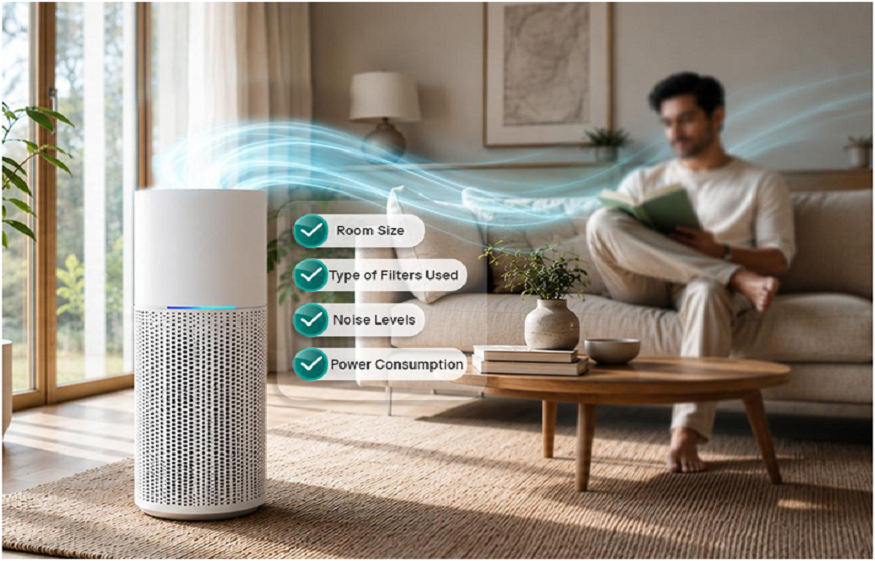
Buying an air purifier is only the first step towards improving your indoor air quality. Its performance will be dependent on how it is being used and maintained. People’s simple mistakes, like wrong placement or ignoring filter changes, can reduce the effectiveness of an air purifier.
This blog will help you learn about these common issues and ensure that you get the best results from your air purifier.
1. Choosing the Wrong Size of Air Purifier for the Room
Not every air purifier is suitable for every room size. CADR shows how fast an air purifier can clean the air. You should opt for a model that fits your room size for better performance. A small purifier may not be able to clean larger rooms and often has to run at higher speeds for longer periods.
2. Wrong Location of Your Air Purifier
The location where you place your air purifier determines its efficiency. An air purifier needs enough space to draw in and release air. Curtains, clothes, or nearby objects can restrict airflow and decrease its performance.
Placing the unit behind furniture also limits air circulation. Keeping some space around the purifier helps it clean the indoor air more effectively.
3. Running Air Purifier Occasionally
Indoor air pollutants are generated throughout the day. Dust, allergens, and pet dander constantly build up indoors. Running the purifier regularly can help you maintain consistent air quality instead of trying to catch up later.
4. Using the Wrong Fan Speed All the Time
Different situations call for different settings. A higher fan speed is helpful when cooking, cleaning, or during periods of heavy outdoor pollution when the concentration is high.
5. Expecting Immediate Results
Air purification is not an instant process. It may take a few days or a few weeks before you notice visible improvements, depending on pollution levels and room size.
6. Forgetting to Replace Filters
Filters get clogged over time and require timely replacement. Indicators that your filter needs replacement include reduced airflow, persistent odours, or increased dust. A clogged filter restricts airflow and reduces the effectiveness of filtration. It can also place additional strain on the internal components of the purifier.
7. Not Following the Manufacturer’s Recommendations
Every model comes with specific maintenance instructions. Following the suggested filter change schedule is important for maintaining proper airflow and filtration efficiency.
Conclusion
An air purifier can help contribute to clean indoor air, but its performance depends on how it is used. Correct placement, regular filter replacement, suitable settings, and good cleaning habits all play a part in getting better results. While it is important to consider the air purifier price, other features such as multi-stage filtration and ease of maintenance also play a role in purchasing decisions. Looking at these features and avoiding common mistakes in air purifier placements will help to ensure a steady supply of purified indoor air.
Usage of Glass Balustrade

The Importance of Battery Backup for Home in Missouri

5 Tips to Improve Your Home
About Author
