
How to Prepare Your Homes Plumbing System for Extreme Weather Events
The weather doesn’t care if your pipes can handle it or not, and by the time you find out they can’t, it’s much too late! But the thing is, extreme heat, freezing temperatures, heavy storms, and steadily dry conditions all put pressure on your plumbing in specific ways meaning a once-a-year plumbing checkup won’t catch everything. You need a tailored response to each major threat, so let’s break it down.
Extreme Heat Puts More Strain On Your Pipes Than You’d Think
Heat not only causes the pipes to become hot but also to expand. Copper, PVC, and even PEX slightly expand when it gets warmer. This exerts pressure on joints, fittings, and connections that were not meant to move. If this happens for enough summers, you will end up facing slow leaks at the seams, hairline cracks in fittings, and early failure of components in the water heater.
Exposed pipes suffer the most. Attics, garages, and pipes along exterior walls experience the highest temperature changes and expansion and contraction cycles. Therefore, before it gets really hot in summer, walk around these places and look for pipes in direct sunlight or spaces with poor ventilation. If a pipe is hot when you touch it during midday, it’s under thermal stress and repeated stress will eventually break a joint.
Water heaters also need attention here. The tank slightly expands when it gets warmer and if the pressure relief valve is old or corroded it may not vent the pressure when it has to. This is not a big problem in spring, but in the middle of a heatwave, this becomes a very serious issue when the water heater is operating beyond its capacity.
Freezing Temperatures Are Still The Number One Cause Of Burst Pipes
Freezing is a primary concern for your plumbing. When water freezes, it expands with incredible force, and this pressure can cause pipes to burst. Cold temperatures combined with wind drafts can quickly freeze pipes and do damage to your plumbing that can be quite costly. Crawl spaces, garages, attics, and any pipes that run along an exterior wall are the pipes most likely to freeze. Even poorly insulated pipes under cabinets are prone to freezing.
Read More: How to Install Wall Panels for a Professional-Looking Finish
Insulation is the name of the game when it comes to protecting your plumbing. Foam pipe insulation is very inexpensive and can be installed quickly on any pipes that run through unheated or exposed areas. Heat cable or heat tape is also a good investment for the coldest areas of your plumbing. Any gaps where piping enters the house should be sealed and caulked immediately to reduce cold air leaks. This will also improve the efficiency of your plumbing in the summer as it reduces the air-exchange around your plumbing and reduces the chance of pipes sweating.
Heavy Rain And Flooding Can Push Sewage Back Into Your Home
Storms and flooding create a different kind of problem: water moving in the wrong direction. When stormwater systems get overwhelmed, municipal sewer lines can back up under pressure, and without protection, that pressure can force sewage back into your home through drains, toilets, and floor traps. It’s one of the worst plumbing failures a household can experience, and it’s largely preventable.
A backflow prevention valve is the fix. It’s a one-way device installed on your main line that allows water to flow out but blocks it from being forced back in. For homes in low-lying or flood-prone areas, this isn’t optional equipment. It’s one of the highest-value plumbing installations available, because the alternative is sewage in your living room during exactly the kind of storm when you can’t get a plumber out fast.
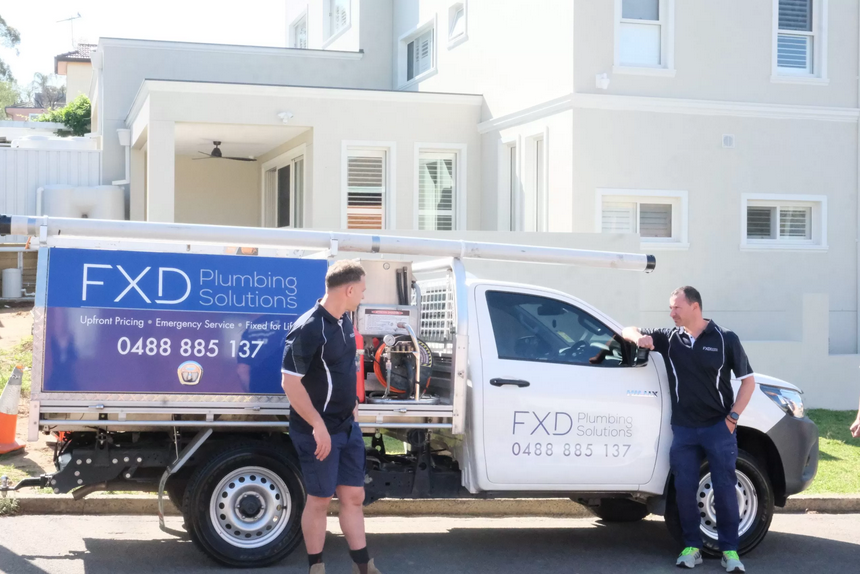
Stormwater drainage around the property matters just as much. Gutters, downspouts, and yard drains need to be cleared before the wet season starts. Blocked drainage doesn’t just flood your yard. It pools water against your foundation, which increases hydrostatic pressure on underground pipes and can accelerate leaks in lines you can’t even see. A Bondi Plumber with FXD Plumbing can assess your drainage setup and install backflow protection before the storms hit, which is a lot better than scrambling for help after the damage is done.
Sump Pumps Fail At The Worst Possible Time
If you have a sump pump, chances are that it is the most essential thing separating you from a basement full of water during a major storm. It is probably also the one thing that you have never tested, and that would break on the day you need it most. In other words, test it now, before the wet season.
Pour some water into the pit and make sure the float switch triggers the pump. Watch it clear the water without any obstruction. Check the area where the discharge line exits the house and see if it flows freely outside; if not, you’ve got a frozen or blocked line and the pump is running but it’s not sending any water out. Fix that. And install a battery backup if you haven’t already. Power outages are common during severe storms, and a sump pump that only runs on mains power is useless exactly when the ground is most saturated and the power is most likely to go out.
Storms Shift The Ground, And That Damages What’s Underneath It
Intense rainfall not only endangers the surface. Saturated soil is in motion, and that effort stresses underground sewer lines designed under the assumption that conditions are stable. Cracks appear, joints disconnect, and the shifted soil could leave open new spaces for tree roots to penetrate. Root intrusion is among the top causes of sewer line clogs, and storms frequently incite the issue, either by being the first source of a crack, or by broadening an already existing fissure enough for roots to begin their infiltration.
The indications of a probable blockage are perceptible before the line is fully obstructed. Draining sinks and tubs slowly on various fixtures, gurgling toilets, and the smell of sewage in your yard or near the floor all signify a partially clogged sewer line. It’s always a good idea to pay attention to these signals after a storm rather than waiting for a full backup. A camera inspection of the sewer line can catch root intrusion or cracking early, well before it becomes an excavation job.
Water Heaters Need Attention Before, Not After, A Weather Event
Pressure spikes happen often in municipal water systems especially during and after extreme weather events, and the safety component of your water heater that’s designed to cope with them is the pressure relief valve. The trouble is these valves corrode and stick over time and one that hasn’t been tested in a year or more might not work when a real pressure spike hits.
So, test the valve once a year. While you’re at it flush the tank too, to remove sediment which accelerates corrosion and makes the whole unit work harder than it should. A pressure regulating valve on your main line adds another layer of protection too, smoothing out municipal pressure spikes before they ever reach your indoor plumbing at all.
Drought Creates Its Own Quiet Plumbing Damage
Drought may seem like a plumbing nonissue, but extended dry conditions can actually put a lot of stress on your plumbing. Changes in municipal water supply can decrease water pressure and cause more sediment to accumulate in lines. Lower water pressure strains valves and fittings over time because sediment acts like sandpaper. Pipes also experience longer periods without flow due to water restrictions, giving mineral deposits more time to settle and build up.
None of this shows up overnight. It shows up as reduced water pressure at your taps, or a water heater that struggles more than it used to, months after the dry conditions have already passed.
Build A Documented Emergency Plan Before You Need One
It is important for every home to have a clear idea of the main shut-off valve’s location and its operation. Try to locate and test it now – not during an active leak, since valves that haven’t been turned in years can seize up when you actually need them to move. Label it with clear instructions, so that absolutely anyone in the house could find and use it if they had to in an emergency – including someone who might be house-sitting or staying over.
Read More: Why Commercial Renovation Projects Need Waterproof Industrial Power Stations
Before you’re standing in an inch of water at 11pm trying to search for one, save an emergency plumber’s number in your phone. A leak detection system is worth the investment too. These smart monitors track water usage and flag abnormal patterns, catching small leaks long before they become the kind of damage that takes weeks to repair. The U.S. EPA reports that the average household wastes nearly 10,000 gallons of water every year through leaks, and around 10% of homes waste 90 or more gallons a day without anyone noticing.
A Pre-Season Inspection Catches What You’ll Miss
Homeowners typically do their own visual checks and overlook everything else, and unfortunately, those are the things that lead to the most expensive plumbing disasters. A licensed plumber will check the state of your pipes, your water pressure readings, drainage, and the areas of your plumbing you can’t easily check yourself, and finding a weak joint or a partially blocked pipe before a storm event occurs is far less costly than needing one emergency call-out after the fact.
This is particularly important in storm-sensitive or coastal flood areas, where storm intensity and drainage demands are higher than average. Having an established relationship with a local plumber means priority call-out if something does go wrong mid-event rather than joining the back of a queue during peak demand.
Put The Checklist To Work
Severe weather events are becoming more common each year. Being reactive and ignoring your plumbing system can result in downstream consequences and significant costs. Ironically, fixing the problem is relatively simple and inexpensive if done in a timely manner. Match each threat to its fix: insulation for heat and freeze, backflow protection and sump pump testing for storms and flooding, valve checks for pressure spikes, and a documented shut-off plan for everything else.
Do the seasonal work before the season arrives, and the plumbing system stays out of the headlines in your own home.
What Qualifies as a Plumbing Emergency? A Homeowner’s Guide
Which is Better- PPR or PVC Pipes?
Peering Below: Unmasking Drain Problems through London’s CCTV Surveys
About Author
